Introduction
In today's world, video games have become a mainstream form of entertainment that appeals to people of all ages. This media form, which has a history of nearly 70 years, has been at the center of different debates in every period. Especially for individuals with children, the question of whether games are harmful or beneficial has been on the agenda for a long time. These debates became even more visible in the early 2000s as the gaming world moved towards a more edgy and boundary-pushing line.
Whether violent video games lead to aggressive behavior is one of the most debated issues in both the public and academic worlds. In the aftermath of traumatic events such as school shootings, video games are often targeted in the media, and games are often easily scapegoated. However, scientific findings do not point to a clear consensus on this issue. While some studies suggest that video games can increase aggression, others argue that this effect is either very low or varies depending on specific personality traits and contextual factors.
In this report, the relationship between video games and aggression will be discussed from both "cause" and "effect" perspectives, and the scientific disagreements on the subject will be evaluated in the light of methodological differences and interpretation of the findings.
Games Do Not Cause Aggression
The association of video games with aggression often stems from generalizations made by ignoring the gameplay style rather than the content of the game. However, research suggests that whether a game is played competitively or cooperatively can be decisive in terms of the psychological effects on individuals.
In an experimental study, participants played neutral content games such as Wii Sports either competitively or cooperatively (Dolgov et al. 2014). Participants who played cooperatively were more likely to help the attendant who dropped a pen on the floor after the experiment. This suggests that cooperative gameplay may increase prosocial behaviors even after the game.
Similarly, Ewoldsen et al. (2012) found that participants who played the violent game Halo II together showed both a decrease in aggressive thoughts and more generous behavior in social tasks. That is, even if the game content is violent, the dynamic of acting together can counteract this effect.
In another study by Schmierbach (2010), the aggressive thoughts of participants who played Halo individually, competitively, and cooperatively were measured. The results showed that those who played competitively developed the highest level of aggressive thoughts, while those who played cooperatively had the lowest. Interestingly, those who played alone reported feeling angrier and more frustrated. This suggests that playing alone can be a source of stress in itself. These findings suggest that video games should be evaluated not only by their content but also by how they are played; cooperative games can not only reduce stress but also promote prosocial behaviors (Dolgov et al. 2014).
In addition, the possibilities offered by video games in terms of stress management are increasingly becoming the subject of research. Reinecke (2009) states that video games offer individuals the opportunity to psychologically distance themselves from daily life and in this respect, they are an effective tool for coping with stress. Furthermore, Rigby et al. (2006) found that there were significant differences in individuals' general experiences and motivation levels related to computer games both between individuals and within individuals.
In this context, a study on the video game Flower found that this game was as effective as mindfulness meditation in reducing stress levels (Desai et al. 2021). Filled with colorful and peaceful visuals, this game has the potential to provide relaxation on both psychological and physiological levels, as well as lowering the heart rate of players.
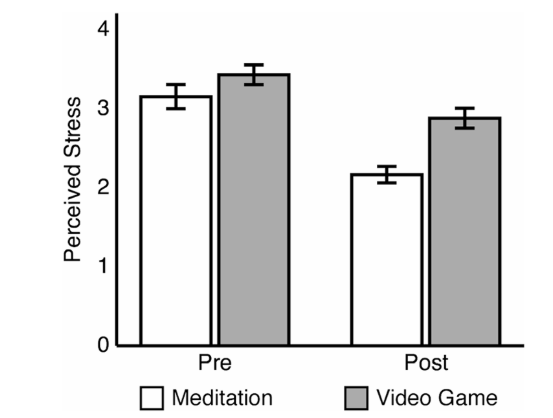
Figure 1: Pre-and post-PSM-9 scores of participants in mindfulness-meditation (Desai et al. 2021).
In the study conducted by Porter and Goolkasian (2019), perceptions of threat or challenge were created through the instructions given to the players. Participants who were given instructions that created a perception of threat reported higher levels of negative emotions (e.g., anger, frustration) after the game, while participants who were given a perception of challenge reported more positive emotions (e.g., happiness, pride).
Games Cause Aggression
Strong arguments on the other side of the debate on whether video games cause aggression are supported by empirical studies, especially on the prevalence of violent content and its cognitive, emotional, and behavioral consequences. First of all, violence is quite common in video games. Between 1989 and 1998, 79% of the best-selling games were violent. Even in teen-rated games, the rate of violence is as high as 94% (Haninger and Thompson 2004).
Some tragic events have also drawn public attention to this relationship. The 1999 Columbine High School massacre in Colorado, the 2002 Erfurt school attack in Germany, and the 2006 Montreal-Dawson College case have all raised debates on the potential effects of violent video games, as the perpetrators played violent video games.
However, there is a point to be cautious at this point. Ferguson (2008), in his study The School Shooting/Violent Video Game Link, argues that the association of such tragic events with games is often the result of a "moral panic" that lacks a scientific basis. Ferguson argues that in light of both social science data and real-world data on crime rates, violent video games do not establish a causal relationship with school shootings.
Carnagey and Anderson argue that video games are no different from older forms of media, such as television, in that they increase the level of aggression with similar effects. Meta-analyses of experimental and correlational studies in the literature show that exposure to violent video games increases aggressive behavior, aggressive thoughts, aggressive emotions, and physiological arousal, while decreasing benevolent behavior (Carnagey and Anderson 2005).
According to the findings reported by Krahé (2014), although the effects of violent video games on aggressive behavior are small or moderate, these effects are statistically significant. Krahé states that these games can influence aggressive behavior through physiological arousal, triggering of aggressive emotions, activation of aggressive thoughts through priming, and modeling of violence through social learning.
Some studies have also suggested that players who are constantly exposed to violence become desensitized to real-life violence over time, with lower levels of empathy and weaker reactions to the risk of harm. On the other hand, the consistency of the ESRB rating system is also questionable. Many teen-rated games feature the use of guns and knives, but realistic gore and consequences are often censored (Haninger and Thompson 2004). This may prevent children, especially at a developmental age, from realistically perceiving the consequences of violence.
Bibliography
- Anderson, C. A., and K. E. Dill. 2000. "Video games and aggressive thoughts, feelings, and behavior in the laboratory and in life." Journal of Personality and Social Psychology 78 (4): 772-790.
- Carnagey, N. L., and C. A. Anderson. 2005. "Violent video game exposure and aggression: A literature review." Minerva Pediatrica 57 (6): 337-358.
- Desai, R., S. Jennings, J. A. Brown, K. Gopinath, and J. E. Joseph. 2021. "Flower power: Video game play and mindfulness influence stress-related outcomes." Discover Psychology 1 (1): 1-9.
- Dolgov, I., S. L. Graves, M. R. Nearents, J. D. Schwark, and S. R. Brock. 2014. "Cooperation and competition in video games: Introduction to the special issue." International Journal of Gaming and Computer-Mediated Simulations 6 (3): 1-10.
- Ewoldsen, D. R., et al. 2012. "Effect of playing violent video games cooperatively or competitively on subsequent cooperative behavior." Cyberpsychology, Behavior, and Social Networking 15 (5): 277-280.
- Ferguson, C. J. 2008. "The school shooting/violent video game link: Causal relationship or moral panic?" Journal of Investigative Psychology and Offender Profiling 5 (1-2): 25-37.
- Gentile, D. A., P. J. Lynch, J. R. Linder, and D. A. Walsh. 2004. "The effects of violent video game habits on adolescent hostility, aggressive behaviors, and school performance." Journal of Adolescence 27 (1): 5-22.
- Haninger, K., and K. M. Thompson. 2004. "Content and ratings of teen-rated video games." JAMA 291 (7): 856-865.
- Porter, A. M., and P. Goolkasian. 2019. "Video games and stress: How stress appraisals and game content affect cardiovascular and emotion outcomes." Frontiers in Psychology 10: 967.
- Reinecke, L. 2009. "Games and recovery: The use of video and computer games to recuperate from stress and strain." Journal of Media Psychology 21 (3): 126-142.
- Roy, A., and C. J. Ferguson. 2016. "Competitively versus cooperatively? An analysis of the effect of game play on levels of stress." Computers in Human Behavior 56: 14-20.
- Ryan, R. M., C. S. Rigby, and A. K. Przybylski. 2006. "The motivational pull of video games: A self-determination theory approach." Motivation and Emotion 30 (4): 344-360.
- Schmierbach, M. 2010. "'Killing spree' or 'healthy competition'? The influence of cooperative and competitive violent video games on aggression-related outcomes." Media Psychology 13 (4): 423-448.